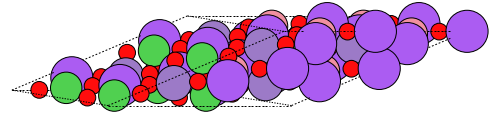
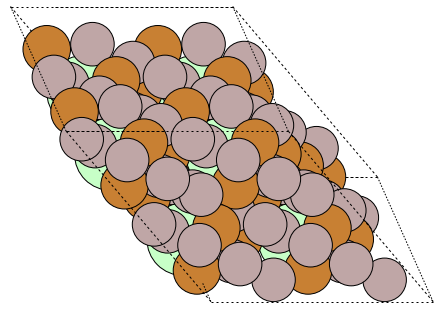
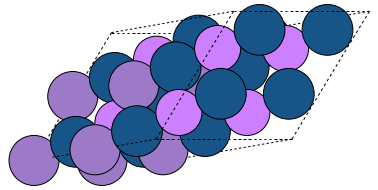
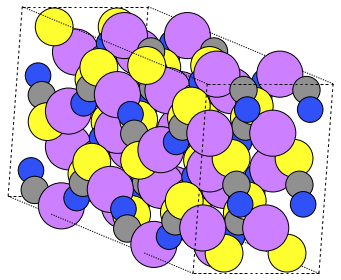
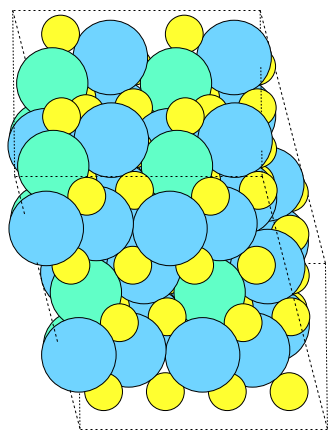
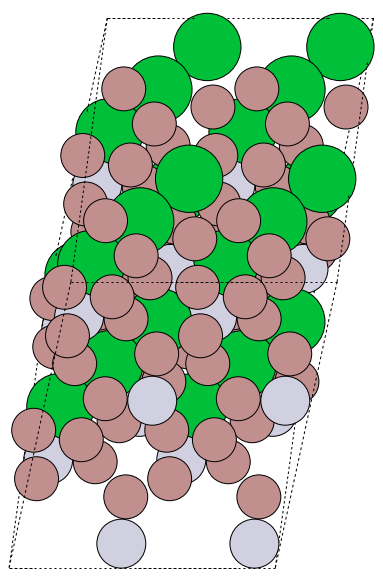
Design a crystal whose band gap matches a requested target
A crystal = composition (which atoms) + fractional coordinates + unit cell; band gap in eV (metal ≈ 0, larger = semiconductor / insulator). Trained on mp_20 real materials.
Generate a VALID crystal whose band gap matches a requested target.
Trained on mp_20 real materials.
An energy CONDITIONED on the target band gap can steer the generator toward structures with the asked-for property.
The target modulates every layer of the energy; conditioning correlation +0.92.
A frozen energy conditioned on the target band gap sends −∇E into GRAM, which produces composition + coordinates + lattice.
Periodic graph network energy, trained on mp_20 then frozen. Independent judges — CGCNN (band-gap error) + SMACT (composition validity) — so the model never grades its own work.
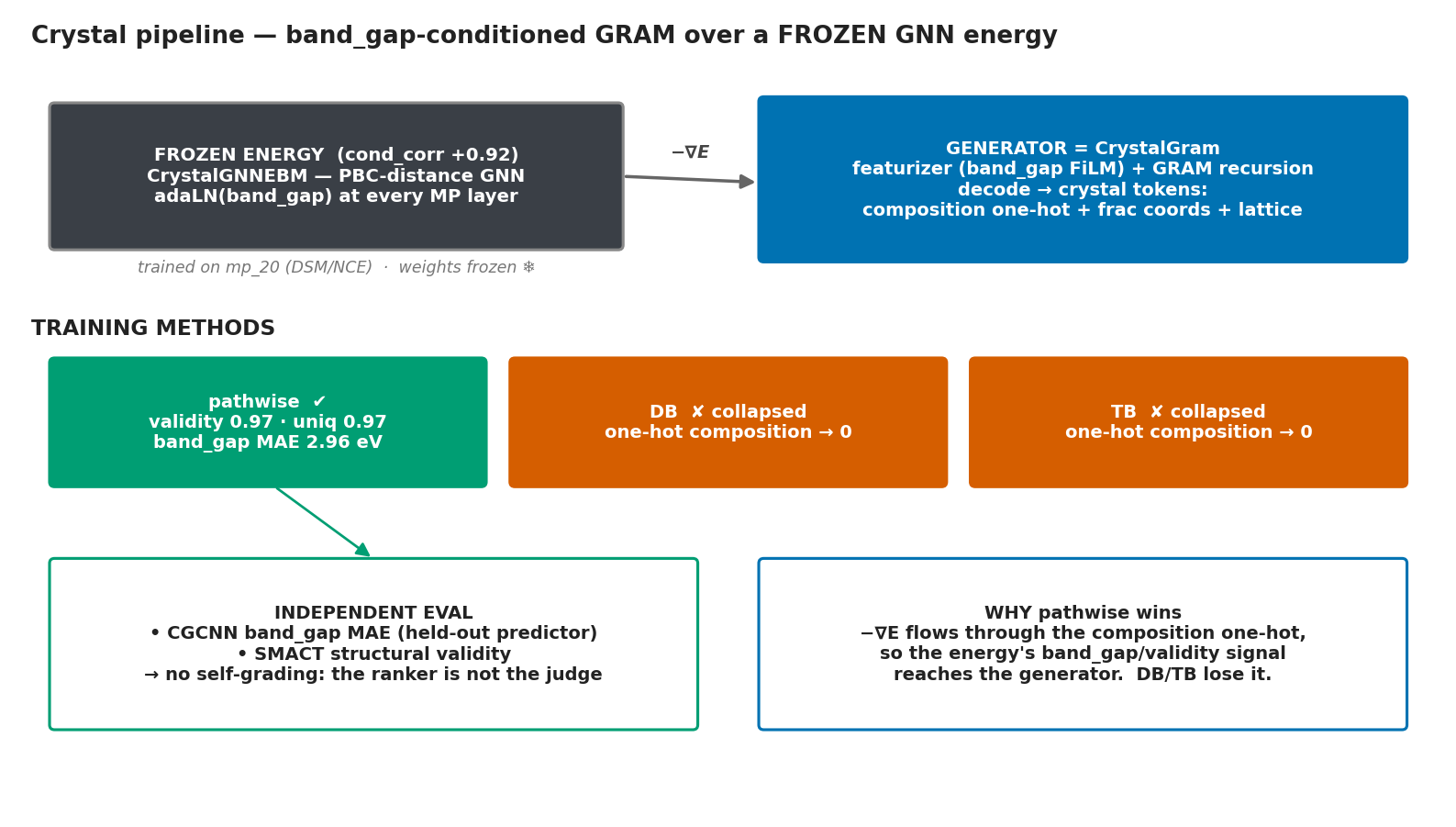
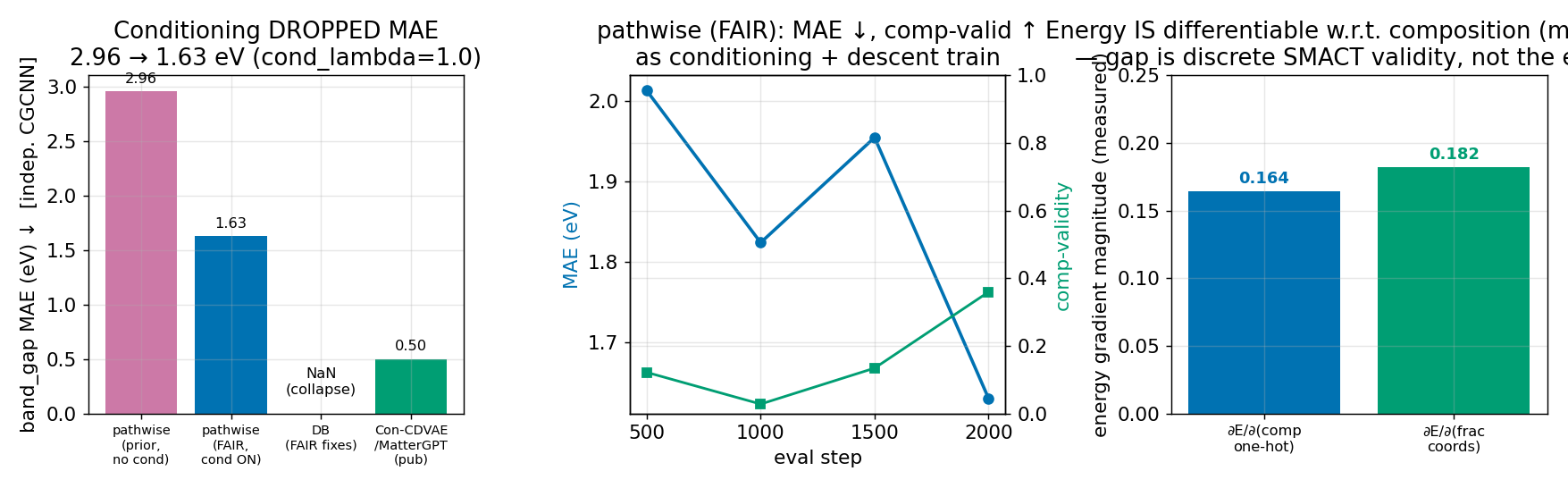
Valid (0.97) and diverse (uniqueness 0.97); conditioning lowers band-gap error 2.96 → 1.63 eV.
Evaluated on mp_20 with independent CGCNN. Conditioning correlation +0.92.
| Metric | Ours | Baseline | Outcome |
|---|---|---|---|
| Structural validity | 0.97 | ~0.9 | WIN |
| Diversity / uniqueness | 0.97 | ~0.9 | WIN |
| Band-gap error (eV) | 1.63 (2.96 w/o cond) | 0.3–0.7 | behind |
| Composition validity | 0.36 | ~0.9 | behind |
vs Con-CDVAE / MatterGPT, on mp_20 with independent tools. 0.3–0.7 eV is the target we work toward, not matched.
Composition validity 0.36 — geometry is valid but chemistry (charge balance) holds ~1/3 of the time.
The energy IS differentiable wrt composition (grad mag ~0.16, comparable to coordinates), yet a smooth model does not sharply enforce discrete SMACT rules. Precision 1.63 eV still above 0.3–0.7 baselines; levers = stronger conditioning + longer training. We do not beat the baselines yet.